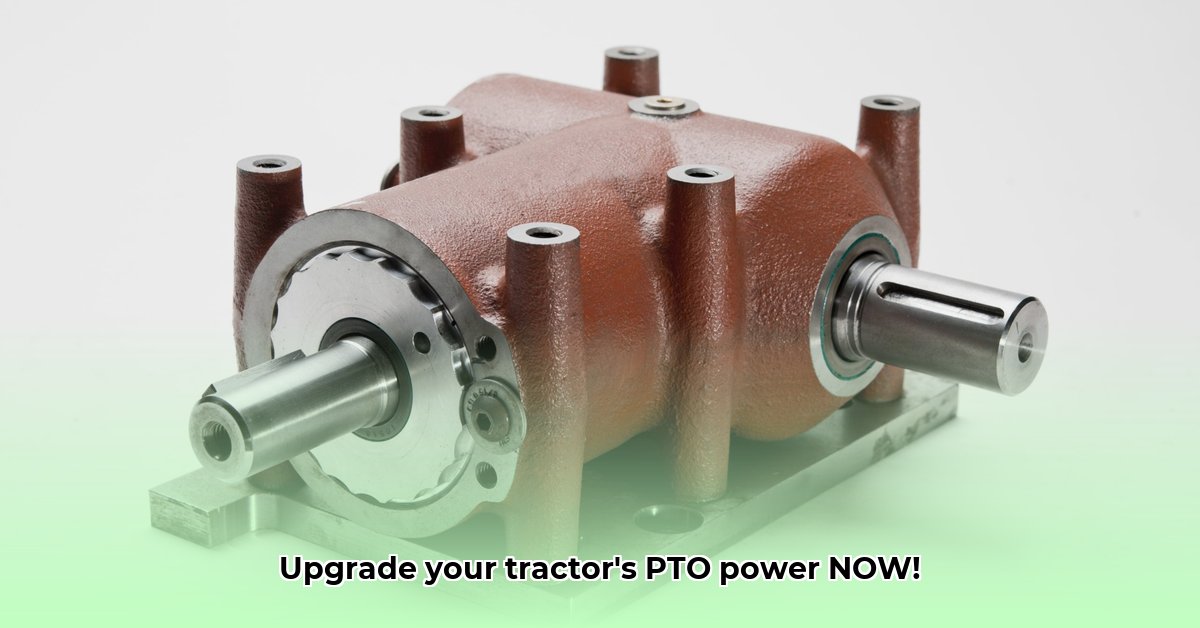
Choosing the right Power Take-Off (PTO) hydraulic pump can significantly impact your farm's efficiency. This comprehensive guide simplifies the selection process, helping you find the perfect pump for your needs. We'll explore pump types, key specifications, and a step-by-step selection process, ensuring you make an informed decision. Understanding the nuances of pump technology will lead to improved productivity and minimized downtime. For more information on tractor implements, check out this helpful guide: Tractor Implements Guide.
Understanding Your Needs: Laying the Groundwork
Before diving into pump specifics, assess your farming operations. What equipment will the pump power? (Examples: sprayers, balers, loaders). What are their hydraulic requirements? (Gallons per minute (GPM), pounds per square inch (PSI)). Establishing these needs early on streamlines your search. A detailed understanding of your applications helps avoid costly mistakes. What's your budget for this critical investment?
PTO Pump Types: A Comparison
Three primary PTO pump types exist, each with distinct advantages and disadvantages:
Gear Pumps
These are robust and reliable, ideal for consistent, moderate-pressure applications. Their straightforward design translates to lower initial cost and relatively simple maintenance. However, their efficiency decreases at higher pressures.
- Pros: Simple design, inexpensive, durable.
- Cons: Lower efficiency at high pressures, less precise flow control.
Vane Pumps
Offering variable displacement, vane pumps provide better flow control than gear pumps, making them suitable for tasks requiring precise hydraulic adjustments. They represent a balance between cost and performance.
- Pros: Smoother operation, variable displacement for precise flow control.
- Cons: More complex than gear pumps, slightly higher cost.
Piston Pumps
Piston pumps are the powerhouses, designed for high-pressure, high-volume applications. Their superior efficiency makes them a worthwhile investment for demanding tasks, but they are more complex and require more maintenance.
- Pros: High efficiency, high pressure capabilities.
- Cons: Most expensive, complex design, higher maintenance demands.
Choosing the right pump type is like choosing the right tool for a job; the best choice depends on the specific task at hand.
Key Specifications: Deciphering the Numbers
Understanding these specifications is paramount for selecting the right pump:
GPM (Gallons Per Minute): This indicates the volume of hydraulic fluid the pump delivers per minute. Higher GPM equates to faster operation of implements. (Think of it as the speed of your hydraulic system).
PSI (Pounds per Square Inch): This specifies the pressure generated by the pump. Higher PSI is crucial for heavy-duty implements requiring more force. (This represents the power behind the hydraulic system).
RPM (Revolutions Per Minute): This is the rotational speed of your tractor's PTO shaft, which directly impacts the pump's output. 540 RPM is a common standard. (This is the speed at which the pump is driven).
Spline Configuration: This refers to the connection between the pump and your tractor's PTO shaft. Mismatch can lead to serious damage. Always consult your tractor's manual.
Material Type: Materials such as cast iron or aluminum affect durability and corrosion resistance. Cast iron offers better durability; aluminum is lighter weight.
Pump Selection Guide: A Step-by-Step Process
Assess Your Needs: Compile a list of implements and their hydraulic demands, which is usually found in the equipment manual. Careful assessment is critical for optimal selection.
Check Tractor Compatibility: Confirm compatibility between your tractor's PTO and the pump's spline configuration and power output. Your tractor's manual provides this information.
Set Your Budget: PTO pumps vary in price. Setting a budget upfront prevents costly surprises.
Compare Specifications: Utilize the following comparison table (data are approximations; check individual manufacturer specifications).
Choose a Reputable Supplier: Opt for a supplier offering support and warranties.
Pump Comparison Table (Approximate Values)
| Pump Type | Typical GPM Range | Typical PSI Range | Typical Efficiency | Cost Range | Best Suited For |
|---|---|---|---|---|---|
| Gear | 5-50 | 1000-2500 | Moderate | Lower | General-purpose applications |
| Vane | 10-75 | 1500-3000 | High | Medium | Applications needing precise flow control |
| Piston | 20-100 | 2000-5000 | Very High | Higher | Heavy-duty, high-pressure applications |
Installation, Maintenance, and Safety
Always follow the manufacturer's instructions for installation. Regular maintenance (fluid changes, filter replacements) is vital for longevity. Safety is paramount; disconnect the PTO shaft before any maintenance. Wear appropriate safety gear.
Conclusion: Making an Informed Choice
Choosing the right PTO hydraulic pump is a significant decision. Meticulous research, coupled with seeking expert advice when needed, guarantees you select the pump best suited to your farm's needs, leading to increased efficiency, productivity, and peace of mind.